
Projects in Jumeirah Village Triangle
View on map
AED 1M

AED 752K

AED 1.2M
AED 1.1M

On request

AED 780K
AED 610K
Information only · We can’t help you buy in this project

AED 570K
Information only · We can’t help you buy in this project

AED 639K
Information only · We can’t help you buy in this project
Nearby Projects
- New Projects in Dubai Production City (IMPZ)
- New Projects in Jumeirah Golf Estates
- New Projects in Dubai Sports City
- New Projects in Jumeirah Village Circle
- New Projects in Jumeirah Park
- New Projects in Tilal Al Ghaf
- New Projects in Jumeirah Islands
- New Projects in Al Furjan
- New Projects in Motor City
- New Projects in Jumeirah Lake Towers
- New Projects in Dubai Studio City
- New Projects in Damac Lagoons
- New Projects in Arjan
- New Projects in The Oasis by Emaar
- New Projects in Dubai Marina
Other Developers
- New Projects by Object 1
- New Projects by Tiger Properties
- New Projects by Tiger Group
- New Projects by Metrical Real Estate Development
- New Projects by Binghatti Developers
- New Projects by Pantheon Development
- New Projects by Ellington
- New Projects by Samana Developers
- New Projects by Danube Properties
- New Projects by London Gate
- New Projects by Taraf Properties
- New Projects by LEOS International
- New Projects by Fakhruddin Properties
- New Projects by Emirates properties
- New Projects by Sol Properties
Explore by Developer in Jumeirah Village Triangle
- Object 1 Projects in Jumeirah Village Triangle
- Tiger Properties Projects in Jumeirah Village Triangle
- Tiger Group Projects in Jumeirah Village Triangle
- Metrical Real Estate Development Projects in Jumeirah Village Triangle
- Binghatti Developers Projects in Jumeirah Village Triangle
- Pantheon Development Projects in Jumeirah Village Triangle
- Ellington Projects in Jumeirah Village Triangle
- Hausen Developments Projects in Jumeirah Village Triangle
A Mid-Market District With Depth: New Projects in Jumeirah Village Triangle
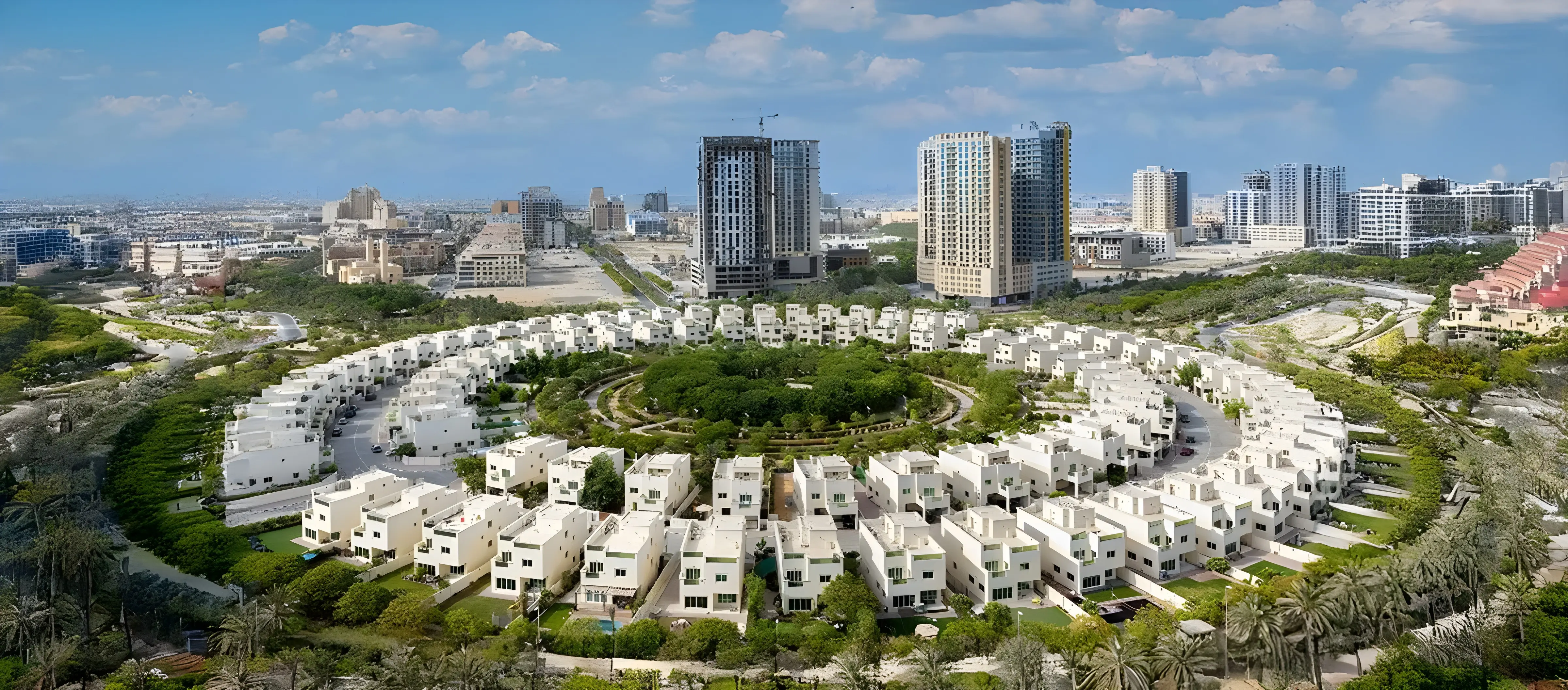
Jumeirah Village Triangle is a residential district within Dubai structured around numbered sub-areas. Districts 1 through 5 form the core residential clusters, with additional development concentrated in specific towers including Lum1nar, Sky Gate Tower, and Seslia Tower. The district has genuine breadth: 54 projects are currently in the pipeline, spread across a wide range of developers and price points.
Where AED 798K Sits in the Range
The median price of AED 798,000 is the most useful starting point for buyers forming a budget. The full range extends from AED 117,136 at the low end to AED 6,120,000 at the top. That spread is wide enough that the two ends represent entirely different buyer profiles. The floor likely reflects the smallest unit types available, while the ceiling corresponds to a small number of premium units pulling the maximum upward. For most buyers, the realistic window sits between the median and roughly double it.
Apartments Define the Product, With a Few Outliers
| Property Type | Projects |
|---|---|
| Apartment | 52 |
| Duplex | 4 |
| Penthouse | 2 |
| Townhouse | 1 |
| Villa | 1 |
Apartments account for nearly all of the inventory, making JVT primarily a market for yield-focused investors and working professionals seeking mid-market ownership. The four duplex listings attract buyers wanting more floor space without leaving the apartment-building format, typically small families or couples upgrading from a single-level unit. The two penthouses represent a small premium tier within an otherwise entry-to-mid-range market. The single villa and single townhouse are outliers here, not representative of the district's character at scale.
28 Developers Across 54 Projects
28 developers working across 54 projects means no single name controls the pipeline. Among those active are Tiger Properties, Binghatti Developers, Danube Properties, Samana Developers, Ellington, Pantheon Development, and Condor Group, alongside more than twenty others. For buyers thinking about resale potential or build quality, this fragmentation shifts the focus: the reputation and track record of the specific developer behind each project matters more than the location's overall standing. Buyers should verify delivery history and current construction progress for each project individually rather than applying a blanket assessment across the district.
From 2023 Completions to a 2029 Horizon
The earliest recorded completion in the current pipeline dates to March 2023, meaning some projects have already handed over. Buyers looking at those entries should confirm directly whether units are complete, occupied, or available for immediate purchase rather than treating them as off-plan. At the other end, the latest completion reaches September 2029, giving buyers entering now on off-plan terms up to roughly three and a half years before the furthest projects deliver.
5% Down, Post-Handover Plans on Four in Ten Projects
A 5% minimum down payment sits at the low end of what Dubai's off-plan market typically requires. Post-handover payment plans are available across 21 of the 54 projects, roughly 39% of the inventory. These plans defer a share of the purchase price past the handover date, which reduces the cash pressure on investors waiting for rental income to begin. The amount deferred and the schedule of instalments vary significantly by developer, so read the full contract terms carefully against the headline figures before committing.
A Family Resident Profile, Not a Transient One
The most common amenities across JVT's projects are gymnasiums, children's play areas, shared pools, landscaped gardens, health clubs, and consistent CCTV and security coverage. The pattern, with family facilities and community outdoor space appearing repeatedly alongside security infrastructure, points to a resident base of long-term tenants rather than short-stay users. Investors targeting yield here should expect demand from families and working households on standard lease terms, not seasonal or short-term occupancy.